Sunday, May 31, 2009

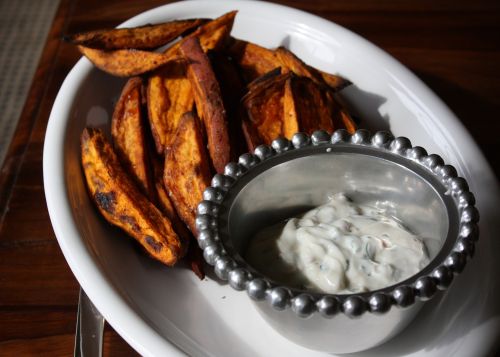
Spicy Sweet Potatoe fries with Lime


Spicy Sweet Potatoes with Lime
Adapted from Martha Stewart’s The New Classics
Serves 6

Strange as it may sound, the sauce really makes this recipe, so don’t skip it!

4 medium sweet potatoes (about 2 1/2 pounds)
2 tbsp. olive oil
2 tsp. ground cumin
1 tsp. hot paprika (DN: I used smoked paprika.)
1 tsp. ground ginger
Coarse salt and freshly ground black pepper
Lime wedges, for serving
Yogurt Dipping Sauce (recipe below)

1. Preheat the oven to 425 degrees. Heat a baking sheet in the oven until hot, about 15 minutes. Meanwhile, slice the sweet potatoes in half lengthwise; slice each half into 3 wedges. Place in a medium bowl, and toss with the oil, cumin, paprika, and ginger. Season with salt and pepper.

2. When the baking sheet is hot, remove from the oven. Arrange the sweet potatoes in a single layer on the sheet. Return to the oven; cook until the potatoes are crisp and golden on the bottom, about 15 minutes. Turn, and contiue cooking until golden all over, about 15 minutes more.

3. Remove from the oven; season with salt and pepper. Serve with lime wedges and sauce.

Yogurt Dipping Sauce
Makes about 1 cup

1 cup plain yogurt
3 tbsp. roughly chopped fresh cilantro
2 tbsp. chopped toasted walnuts
1 tbsp. fresh lime juice
1/2 tsp. ground cumin
Coarse salt

Combine all the ingredients in a small bowl. Cover with plastic wrap, and refrigerate until ready to use, up to 1 day.

Avocado, Tomato and Red Onion Salad


Makes 4 to 6 servings

* 2 Hass avocados, peeled, pitted and cut into 8 slices each
* 1 pound Roma tomatoes, quartered
* 1/2 cup thinly sliced red onion
* 1/2 cup flat-leaf parsley leaves
* Salt and freshly ground black pepper, to taste
* 3 tablespoons extra-virgin olive oil
* 1 tablespoon freshly squeezed lime juice

Wednesday, April 22, 2009

Perfect Pork tenderloin

Perfect Pork Tenderloin

There are some skills in the kitchen that, once mastered, pay off again and again. Basic techniques that can transform all of your cooking from good to great.

Proper salting is an example. Or blanching vegetables to keep them crisp and vibrant. And, of course, cooking meat so that it is tender and flavorful before any sauce ever touches it. I've already covered how to grill chicken, now it's time for some juicy piggy!

Pork tenderloin is a great meat to cook at home. It's very lean with a fat content only slightly higher than chicken breasts, you can successfully roast a small loin that will serve as few as 2 people, and it cooks quickly due to the small size. It's also one of the most tender cuts of pork, which is especially important now that commercial pork has lost its former succulence; pigs are now bred to be very lean in order to be "the other white meat."

Pork tenderloin is also terrifically easy to master. All you need is a standard meat thermometer. With one of these in your kitchen toolkit, you can cook perfect piggy every time. Aim for a final temperature (after resting) of 145F, and you'll have luscious (yet safe to eat) pork on your plate. You can also use an instant-read thermometer, but you can't leave that in the oven.

The easiest way to reach the optimal final temperature and also develop a flavorful brown crust is to sear first, then bake to finish.

How to cook perfect, moist pork tenderloin:

1. Buy pork tenderloin, not pork loin. I find that people are often confused about this. Learn the difference: pork tenderloins are relatively thin strips of meat, with a maximum 2-inch diameter and a dark color. Pork loin is much larger, pale, and often sold as "loin roast" or cut into "butterfly loin chops". Pork loin is not nearly as tender and is best when brined before cooking.

2. Remove the silver skin. It's that wide piece of silvery membrane attached to the thick end and it is chewy and tough. Great video demonstration here.

3. Season well. Rub pork with a little oil and plenty of kosher salt, freshly cracked pepper, and any dried herbs or seasonings. Don't be timid with salt or spices -- the interior will not be in direct contact with the seasonings and you need to go heavier than you might think.

4. Sear on all sides in a preheated skillet set over high heat until golden brown. Do not sear for too long or you risk overcooking the meat and making it tough. One minute per side is plenty. Sear only one loin at a time to prevent overcrowding your pan, which will create steam and reduce browning. Don't shake the pan or shift the meat while it's browning. Move the meat only when you're ready to turn it over.

5. Finish in the oven and check internal temperature. Move the meat to a baking sheet or dish and roast in a preheated 375F oven until 140F internal temperature. This usually takes around 15 minutes, but measure the temp with a meat thermometer rather than relying on a time measurement, since your searing time and tenderloin size may vary. Insert the thermometer lengthwise into the thickest end of the tenderloin, as shown.

6. Let rest. Remove loin(s) from the hot pan to a platter, cover loosely with foil, and let rest for 10 minutes. Slice and serve.

When sliced, the pork should be blushing pink in the center, not gray. Don't worry if you've been warned not to eat undercooked pork -- pork is safe at 145F and your tenderloin will rise to that temp while it rests. The tenderloin naturally has a slight pink color when properly cooked.

Get creative when seasoning your pork! Fresh herbs are an obvious choice, with thyme, sage, and rosemary being solid choices that also work well with many sauces. Use generous amounts of chopped herbs on the surface of the meat to ensure that the interior is seasoned well enough.

Dried spice mixes are also great; try a mix of dried coriander, cumin, and smoked paprika to take the tenderloin in an entirely different direction. You can also mix dried spices and fresh herbs -- one of my favorite combinations is fresh sage, fresh rosemary, and Chinese five-spice.

Rogan Josh

Rogan Josh
Thank you again, Rose–time for you to start a food blog! :-)
  • 4 Tbsp ghee
  • 1/4 tsp asafetida
  • ~2-3 lb lamb (I used the sirloin portion of the leg. Use a moderately quick cooking cut, like shoulder/neck)
  • Spice blend
    • 10 dried Kashmir chilies (roughly 3 Tbsp Kashmir Chili Powder if you don’t have whole)
    • 4 green cardamom pods
    • 1 cinnamon stick
    • 6 cloves
    • 4 black peppercorns
    • 3/4 tsp turmeric
  • 8 cloves garlic
  • 1 inch piece ginger
  • 2 black cardamom pods
  • 2 Tbsp ground coriander
  • 3/4 tsp turmeric powder
  • 1.5 cups yogurt
  • 1 cup water
  • 1 Tbsp salt
  • Optional: 1/4-1/2 tsp saffron threads

Begin by preparing the spices. You’ll cook some of them whole, so set those aside. The others should go right into a coffee/spice grinder and be ground down to powder. Set this aside.

Then, peel the garlic and ginger. Grind these down to a paste as well, adding a very sparse amount of water if needed to facilitate blending. Set this aside.

Now, on to the lamb. Trim off any excess fat, remove the bone(s) if necessary, and cut the meat into 1-2 inch cubes. In a large pan, warm up about 1 Tbsp of ghee over medium high heat. Throw a pinch of asafetida into the hot ghee (a little goes a long way, so be conservative) for a minute and then add some of the lamb pieces (don’t overcrowd the pan–work in batches if you need to). Brown the lamb for roughly 2 minutes per side and then remove from the pan and set aside.

In a bowl (or since my food processor was already dirty from making the garlic/ginger paste…), add the yogurt and whip it vigorously for a few seconds to lighten it up a bit. Add it slowly, roughly one spoon at a time to the pan, and stir constantly for roughly 30 seconds to prevent the yogurt from curdling when it first meets the heat. Blend well with the paste and spices and continue to fry this for roughly 3-4 minutes further.

Now, add the warm/hot water and salt into the pot and raise to a boil, scraping the bottom and sides of the pan to dislodge any browned bits. Return the lamb to the pot, cover, and drop the heat to low, simmering until the meat is tender (roughly an hour). Stir periodically to prevent the gravy from sticking and burning to the bottom of the pot. If the gravy is too thick you can add ~1/4 cup of thinned yogurt at a time until it is more to your liking.

Once done cooking, you’ll probably have a bit of fat settled on the surface. Skim it off as best you can before you start serving. If you’ve decided to include saffron, crumble the threads in a small amount of hot water a few minutes before you expect to be done cooking. Once you’ve skimmed off the fat, add the saffron mixture into the curry and give it a good stir.

Tuesday, April 7, 2009

peanut butter cups


peanut butter cups

quick note: be sure to leave your cups in the fridge until ready to eat, as they have a tendency to soften up rather quickly. gotta love summertime…

update: suggested Reese’s peanut butter cups have peanut butter added to the chocolate part, so I’m definitely trying this the next time I make these. I’m thinking 2-3 T to begin with.
update on the update: adding PB directly to the chocolate was a fantastic suggestion! also, the cups taste awesome straight out of the freezer.

for 12 “small” cups:

12 mini cupcake liners
3/4 cup semisweet chocolate chips
1/2 cup creamy natural peanut butter + 2 generous T to add to the melted chocolate
1/4 cup powdered sugar
1/2 t pure vanilla extract
pinch fine sea salt [if your PB is already salted, it's optional to add more]

melt the chips in your microwave, keeping a close eye on them and stirring often to make sure they don’t burn. it should take between 1-2 minutes. add the 2 generous T and stir to incorporate.
give it about 5 minutes to cool down a bit, it’s easier to spread around when not lava-hot.

place a heaping teaspoon of melted chocolate in each mini cupcake liner and spread it all over the place with the back of a spoon. repeat with all 12 liners.

place the chocolate-covered liners onto a plate, into your fridge, to let it all harden.

meanwhile, stir together peanut butter, vanilla, salt, and sugar. if your peanut butter is anything like mine, it should form a sort of paste that you can start kneading to make sure all gets incorporated really well.

the chocolate should be hard by now, so divide peanut butter paste into all 12 liners, pressing down gently to make sure the paste goes everywhere.

top with heaping teaspoon of chocolate [melt it again if needed], spreading carefully so that none of the PB paste can be seen.

chill in fridge for at least one hour, until ready to devour.

Meatballs with saffron sunset sauce


Meatballs with saffron sunset sauce

Serves 8 (made 41 meatballs using a rounded 1 tablespoon measure)

- 2 lbs ground beef, or mix of ground beef and ground turkey. Do not bother using lean meat - you will drain the fat off when roasting in oven.
- 2 eggs, lightly beated
- ½ C dried bread crumbs or matzah meal
- Salt and freshly ground black pepper to taste
- 1 t saffron threads, crushed and infused and ½ C hot water
- ¼ C olive oil
- 2 cloves garlic, minced
- 1 bunch fresh cilantro, chopped (1 C or 2 large handfuls)
- 1 t sweet (Hungarian) paprika
- 1 t ground turmeric
- 1 t powdered chicken stock, or 1 bouillon cube crushed or ½ C chicken stock
- ½ C water (or 1 C if using powdered chicken stock or bouillon cube)
- Steamed rice for serving (optional)

Preheat oven to 375ºF.

Make saffron infusion by crushing 1 t saffron threads in ½ C hot (not boiling) water - allow to infuse for ~10-15 minutes.

In a large bowl, combine the meats and eggs; add bread crumbs or matzah meal, salt, pepper, and ¼ C of saffron infusion. Knead well with hands to mix.

Form into walnut-sized meatballs and set aside. I used a tablespoon to keep the balls relatively uniform. Do not make the meatballs too compact or they will be tough when cooked.

Pre-roast the meatballs on parchment- or foil-covered baking sheet for 10-15 minutes to release and drain off some of the fat. This is what will remain when you remove the half-done meatballs to add to the sauce. NOTE, this step can be skipped if you are in a rush and want fewer dishes to wash, but I found that the pre-roasted meatballs tasted better and are probably a bit healthier.

While meatballs are roasting in the oven, in a large sauté pan or skillet, heat oil and add garlic, fresh cilantro, spices, powdered chicken stock/bouillon/stock, and 2 T saffron infusion. Cook until sauce turns yellow and then add additional water (total liquid added should be 1 C). The sauce is what gives the dish its sunset name.

Add the meatballs to the sauce in a single layer and simmer until cooked through, about 10-15 additional minutes. Meatballs should cook for a total of 25-30 minutes between the oven and stovetop (or on stovetop only if you skip the pre-roasting step).

Add remaining saffron infusion and heat through.

Taste and adjust the seasoning.

Serve hot with or without rice. If serving with rice, considering doubling the sauce recipe.


Brownie Cream Cheese Pie


Brownie Cream Cheese Pie

1 pre-made refrigerated pie crust (from 15-ounce package)
1 (8-ounce) package cream cheese, whipped
3 T. sugar
1 tsp. vanilla
3 eggs
1 (15.1-ounce) package deluxe brownie mix with fudge packet (fudge packet reserved for finishing)
1/4 cup oil
1 T. water

Heat oven to 350 degrees F. In medium bowl, combine vanilla, cream cheese and 1 of the eggs. Beat until smooth. Set aside.

In large bowl, combine brownie mix, oil, 1 tablespoon of the water and remaining 2 eggs. Beat 50 strokes with spoon.

Spread 1/2 cup brownie mixture in bottom of crust-lined pan. Spoon and carefully spread cream cheese mixture over brownie layer. Top with remaining brownie mixture. Bake at 350 degrees F. for 40 to 50 minutes or until center is puffed and crust is golden brown.